
Pistol Slide Milling for Optics: Benefits, Process, and Costs
Jeremy Walberg Jun 25, 2026
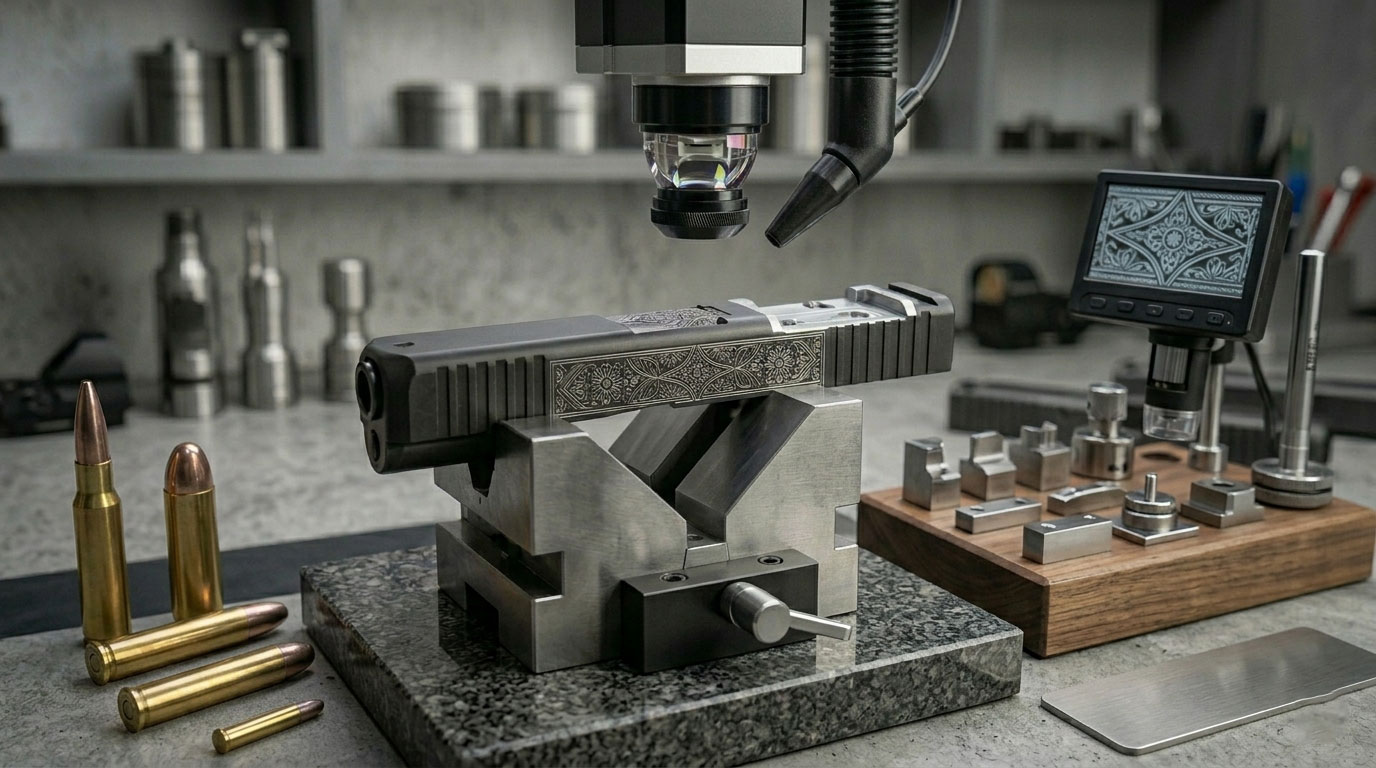
Pistol Slide Milling for Optics: Benefits, Process, and Costs
Meta description: Slide milling cuts your pistol slide for direct-mount red dot optics. Lower mounting, repeatable zero, and a clean install — here’s what to spec.
Slide milling is precision machining of a handgun slide to accept a red dot optic without an adapter plate. The optic sits 0.150“–0.250” lower than a plate-mounted setup, returns to zero reliably, and looks like the slide came from the factory that way. For shooters running a serious carry or competition pistol, it’s almost always worth doing over a plate.
Why direct-mill a slide
Three reasons:
- Lower mounting height. A direct mill puts the optic glass closer to the bore, which means standard-height irons co-witness in the lower third of the dot window. With a plate, the optic sits higher and you need suppressor-height irons to co-witness, or the irons disappear below the optic.
- Repeatable zero. The optic mounts directly to machined steel with no intermediate plate. Less stack-up means less variability after dropping the pistol or removing/re-installing the optic.
- Cleaner install. No exposed plate edges, no sealing concerns at the optic-to-plate joint, no extra screws to track. The slide looks finished.
The trade is irreversibility — once the slide is cut for a specific optic footprint, it accepts that footprint or footprints with a compatible mount cut, and that’s it.
Common optic footprints
The footprint is the screw-hole and locator-pin pattern that mounts the optic to the slide. The major standards:
- Trijicon RMR — most common for full-size pistols; supported by Holosun 507C, 508T, EPS Carry; many Gen 2 of Holosun
- Shield RMSc / Holosun K — micro footprint for sub-compact slides (P365, Glock 43, Hellcat); Sig Romeo Zero, Holosun 507K, EPS Carry
- Trijicon SRO — same footprint as RMR but larger window; carries over to many open-emitter optics
- Leupold DeltaPoint Pro (DPP) — distinct footprint; used by some competition shooters
- Aimpoint ACRO / Steiner MPS / Sig Romeo2 — closed-emitter footprint, more popular for duty/military
- Docter / Noblex / Vortex Viper — older European-derived footprint, less common in new builds
If you’re not sure which footprint to spec, decide what optic you’ll run before the slide goes to the mill. Many slides can be cut for a multi-footprint mount (RMR/Holosun K combined, etc.), but the cleanest result is a single-footprint cut.
The milling process
The slide gets shipped to the smith or removed if the work is local. From there:
- Inspection and measurement — slide dimensions, thickness at the optic mounting area, available material below the cut
- CAD layout of the optic cut — most precision shops have programmed cuts for common footprints; custom or unusual footprints require setup time
- CNC milling — the slide is fixtured and the cut is run on a CNC mill, typically taking 1–3 hours of machine time
- Pin holes drilled — locator pins or recoil-handling pins for footprints that require them (RMR, ACRO)
- Tapped screw holes — sized to the optic’s mounting screws, usually #6-32 or M3 depending on the footprint
- Refinish — Cerakote, nitride, or DLC; the new cut needs a finish
- Test fit and reassembly — the optic mounts and locks down, the slide cycles, and the iron sights index correctly
Total turnaround at most precision shops is 2–6 weeks depending on workload. Faster expedited options run a premium.
Iron sight considerations
Direct-milled slides often need new iron sights to co-witness with the optic:
- Suppressor-height irons sit taller than standard, so they’re visible above or through the optic window when the dot fails
- Lower-third co-witness means the irons appear in the bottom third of the optic window
- Absolute co-witness means the irons are centered with the dot
For a defensive pistol, suppressor-height irons + lower-third co-witness is the most common spec — backup irons available without sacrificing a clean optic picture.
If your direct mill cut sits low enough, factory-height irons may co-witness; with most cuts, you’ll need to upgrade the irons.
What it costs
Pricing varies by shop and footprint complexity:
- Standard direct-mount cut (single footprint, RMR or RMSc): $150–$250
- Multi-footprint cut (e.g., RMR + adapter): $200–$300
- Cut + refinish in Cerakote: $300–$500
- Cut + refinish + accent cuts (lightening cuts, serrations, custom front cocking serrations): $500–$800+
Add the cost of the optic ($300–$1,200) and replacement iron sights ($60–$150) for a full optic-ready upgrade.
What can go wrong
A bad slide mill job shows up as:
- Optic that doesn’t sit flat (high-low or rocking under recoil)
- Screws that bottom out before they tighten properly
- Locator pins that don’t align
- Slide that doesn’t return to battery, or cycles inconsistently
- Optic that loses zero after a magazine or two
The fix for any of these is more machining, often a re-cut or a sleeve insert. Pick a smith who specializes in the footprint you want, and ask to see examples of completed work. Optic cuts are precision machining — the difference between a competent shop and an excellent one is real and visible in the finished product.
Pair with refinish and irons
Standard build sequence:
- Send slide to mill
- Mill cuts the optic and any accent cuts
- Slide goes to coater for Cerakote (or alternative finish)
- Iron sights pressed in by the coater or the smith
- Slide returns to you
- You mount the optic, zero, and run rounds
If you have any custom engraving — name, logo, dedications — schedule it after Cerakote so the laser ablates the coating cleanly.
Spec the build, then commit
A direct-mounted optic on a properly milled slide is one of the highest-impact handgun upgrades available. It changes how fast you find the dot, how consistently you make hits, and how the pistol presents from the holster. Get the footprint and refinish locked before the slide goes out, and you’ll have a clean, durable, high-performance setup.
Related services
- Cerakote for slide refinishing after the cut
- Laser engraving for custom marks on the milled slide
- Custom firearms for events and raffles — slide-milled pistols are a common centerpiece for high-end giveaways

Information