
What Does Hub Compatibility Mean in Modern Suppressors?
Jeremy Walberg Jun 25, 2026
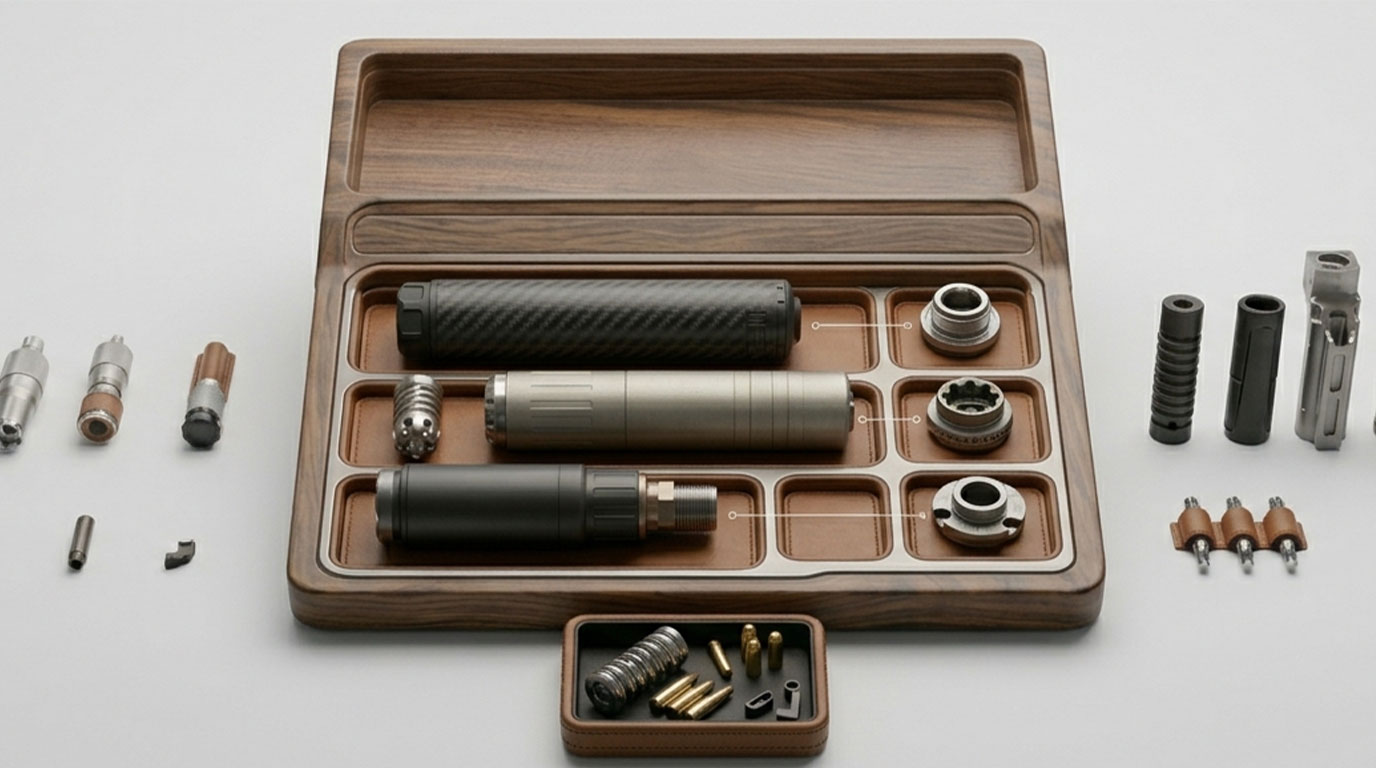
What Does Hub Compatibility Mean in Modern Suppressors?
Hub compatibility is shorthand for a 1.375x24 thread cut into the rear of a suppressor - a now-standardized interface that lets one suppressor accept different modular mounting systems. Buy a hub-compatible can and you can switch between direct-thread, quick-detach via brake, quick-detach via flash hider, and other mount types by swapping the rear adapter, not the suppressor itself. For a shooter running multiple rifles or planning for future builds, it's the difference between buying one can and buying a can for each platform.
What the standard actually is
The 1.375x24 thread (sometimes called 1.375“-24 or just”the HUB") is an industry-adopted rear-thread interface that originated with Plan-B and has since been adopted by most major suppressor manufacturers. The hub itself is the threaded socket; the mount is whatever screws into it.
A hub-compatible suppressor has the threads cut into the rear end cap. Different rear adapters can be installed and swapped without disassembling the can or affecting the rest of the construction.
Why this matters
Without hub compatibility, a suppressor is locked to one mount type. If you bought a can with a SilencerCo ASR rear and you decide you want to run it on a rifle with a Dead Air KeyMo brake, you'd have to either:
Buy another suppressor with the matching mount Send the can back to the manufacturer to have the mount changed (sometimes possible, sometimes not) Use an adapter that adds length and weight
With hub compatibility, you unscrew the existing adapter, screw in the new one, and the same can runs on the new rifle.
Mount systems that work with the hub
Most major QD-mount makers ship hub-compatible adapters as part of their product line:
Plan-B (sometimes considered the originator) - clean, small-diameter direct thread or QD adapters SilencerCo ASR - rear-thread adapter screws into hub Dead Air KeyMo - KeyMo-compatible adapter Q LLC Cherry Bomb / Plan-A - Q's mounts Surefire SOCOM - SOCOM mount adapter Griffin Armament Plan-A - Griffin's mount system HUB-direct mounts - direct-thread or fixed-thread adapters
Each adapter screws into the same 1.375x24 socket. Switching adapters typically takes 60 seconds with a wrench.
Benefits in practice
Versatility across rifles. One can, one Form 4, one $200 tax stamp, multiple rifles. Switch rifles by switching adapters and re-zeroing.
Ammo and barrel compatibility. A direct-thread adapter for one rifle, a QD adapter on a brake for another, a different brake for a third. The same suppressor adapts to each barrel's thread spec.
Future-proofing. New mount technologies and new brake designs can be added to the same can. You're not buying a can for today's mount technology only.
Backup and parts support. If an adapter wears out or gets damaged, replace the adapter, not the can. Adapters typically run $80–$200; suppressors are $700–$2,000.
What hub compatibility doesn't do
It doesn't change how the suppressor performs acoustically or mechanically. The suppressor's noise reduction, recoil reduction, and durability are functions of its baffle design, materials, and length - not of the rear thread.
It also doesn't mean every adapter from every manufacturer fits every hub-compatible can. The 1.375x24 thread is standardized, but adapter dimensions, recoil-handling features (recoil rings, pin patterns), and gas seal specifications can vary. Stick with adapters from established manufacturers, and verify compatibility before purchase.
Hub-compatible vs. fixed-mount suppressors
Some suppressors still ship with fixed mount systems - the mount and the rear end cap are integrated, not removable. These are simpler in construction, sometimes lighter, sometimes more durable for a single mount type, but they lock you into that mount choice for the life of the suppressor.
For most buyers planning multiple rifles or expecting their suppressor needs to evolve, hub compatibility is the better long-term choice. For buyers who know exactly what mount they want for one specific rifle, a fixed-mount can with a clean integrated design has its appeal.
When to spec hub compatibility
Hub compatibility is worth specifying if:
You own or plan to own multiple rifles in different cartridges You're not yet sure which mount system you prefer (direct thread vs. QD via brake) You're investing in a long-term suppressor purchase and want flexibility
It's less critical if:
You have one rifle and one specific mount preference (a fixed mount can is simpler) You're buying at the entry-level price point where hub-compatible options are limited
Plan the muzzle thread spec for your rifle
Whichever mount you settle on, the rifle's barrel needs to be threaded to match. Common rifle thread specs:
5/8-24 for .30-cal cartridges (.308, .300 Win Mag, .300 PRC) 1/2-28 for 5.56 / .223 9/16-24 for .338-class cartridges 3/4-24 or larger for .416 and above
If you're spec'ing a precision build with suppressor compatibility in mind, talk to your gunsmith and your Form 4 dealer in parallel - the rifle's muzzle thread, the suppressor's hub system, and the chosen mount adapter all need to match.
Modular for the long run
Hub compatibility is one of the better quiet trends in suppressor design over the last decade. It turns a $1,200 can from a single-rifle accessory into a flexible piece of gear that adapts to your collection. For a serious shooter, the difference compounds over time.
Related services
Muzzle threading - required for any direct-thread adapter; commonly 5/8-24 or 1/2-28 Custom barrel work - chamber and thread specs designed around the suppressor

Information