
Bolt Fluting: Does It Improve speed, Weight and Performance?
Jeremy Walberg Jun 25, 2026
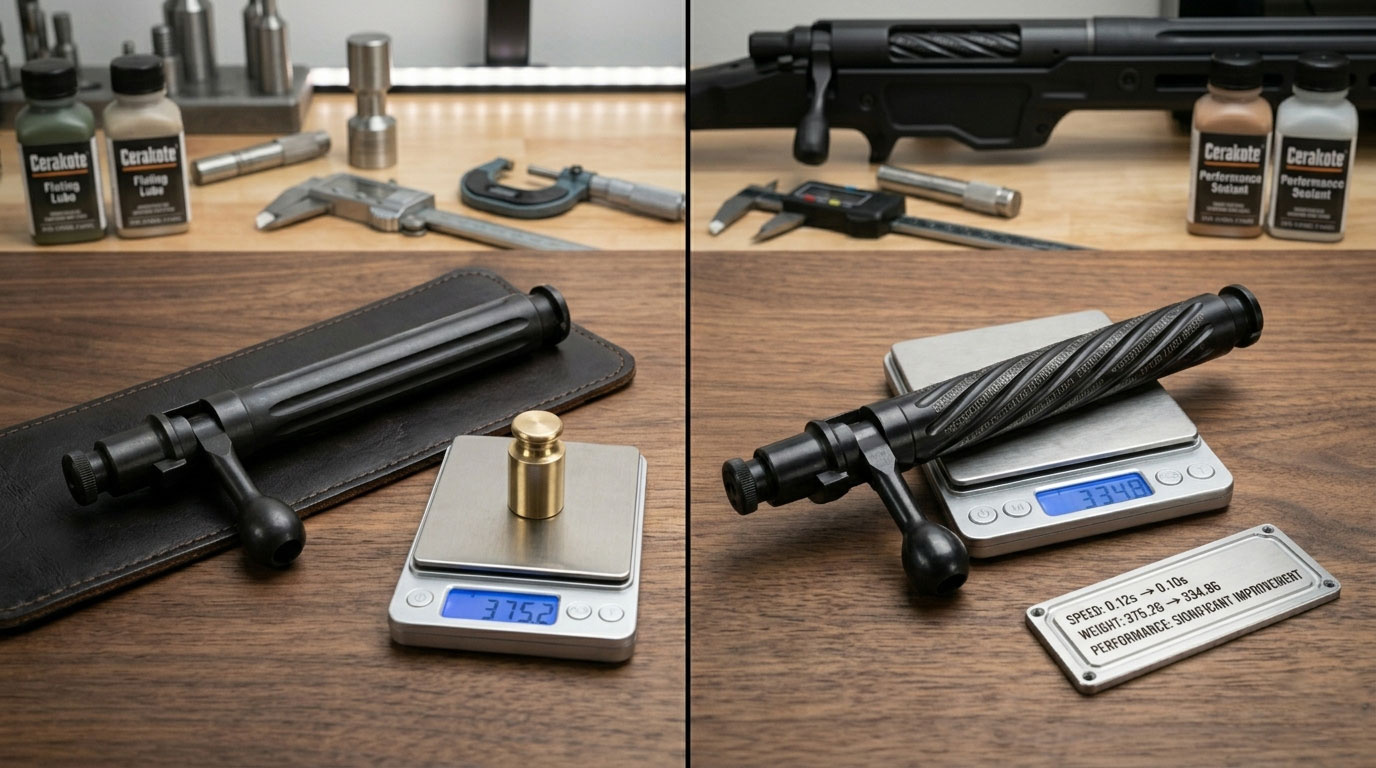
Bolt Fluting: Does It Improve speed, Weight and Performance?
Bolt fluting is a cosmetic and minor-functional upgrade. It removes a small amount of steel from the bolt body, channels debris and lubricant out of the action, and makes the rifle look custom. It does not make the rifle faster, more accurate, or meaningfully lighter. If you understand what it actually does, it’s a worthwhile $80–$150 add to a custom build. If you expect it to change how the rifle shoots, you’ll be disappointed.
What bolt fluting is
Bolt fluting is a series of grooves machined along the bolt body — usually three to six straight cuts, sometimes a spiral pattern. On a Remington 700-style bolt the grooves run between the bolt handle and the locking lugs. Cuts are shallow (typically 0.030“–0.060” deep) so the bolt’s structural integrity isn’t affected at lockup, where the lugs do the work.
It has to be done on a lathe or mill with the bolt indexed precisely. A poorly cut flute can stress the bolt body and cause issues over time — this is not a weekend garage project.
Does it make the rifle “faster”?
No. The rifle’s cycle time is governed by how fast the shooter works the bolt, not by the bolt’s mass. The grooves do reduce friction surface between the bolt and the receiver raceway, which can make cycling feel slightly smoother, but “smoother” is not “faster.” Anyone selling bolt fluting as a speed upgrade is overselling it.
What it does help with is debris management. The flutes give dirt, sand, and excess oil somewhere to go besides the contact surface between the bolt body and the receiver. For a rifle that lives in dusty conditions — a hunting rifle in dry country, a PRS gun on a windy stage, a field-deployed precision rifle — that’s a real, if small, reliability benefit.
Weight reduction
A fluted bolt body is typically 0.3 to 1.0 ounces lighter than its unfluted equivalent. That’s it. You will not feel the difference in handling. If weight is the goal, you get more out of barrel fluting, a lighter chassis, or a carbon-wrapped barrel by an order of magnitude.
The real reason most people get it
Bolt fluting looks good and signals that the rifle is a custom build. On a precision rig where the action has been blueprinted, the barrel is custom-chambered and the chassis is purpose-built, an unfluted plain-jane bolt looks out of place. That aesthetic alignment is a legitimate reason to do it — just don’t pay for it expecting performance gains it can’t deliver.
When it’s worth it
It’s worth it if you’re already paying for a full custom build and want the bolt to match the rest of the work. It’s worth it if you actively shoot in dirty conditions and want the debris-channeling benefit. It’s not worth it as a standalone upgrade to an off-the-shelf rifle.
Cost runs $80–$150 for a basic straight flute, more for spiral patterns or accent cuts. Lead times depend on whether the bolt has to be Cerakoted afterward (most are, since the cuts expose bare metal that will rust).
Related services
- Receiver blueprinting — pairs naturally with bolt work since both target a smoother, more consistent action
- Cerakote — required after fluting unless the bolt is stainless and you don’t mind the contrast

Information